
Client / Bufalini + Paolo Ulian (AD)
Year / 2026
ALCM is conceived as a system.
Not as an object.
A project that explores marble as an open structure, capable of generating configurations over time.
Geometric elements with dimensions in centimeter multiples define the compositional principle.
The module becomes both unit of measure and language.
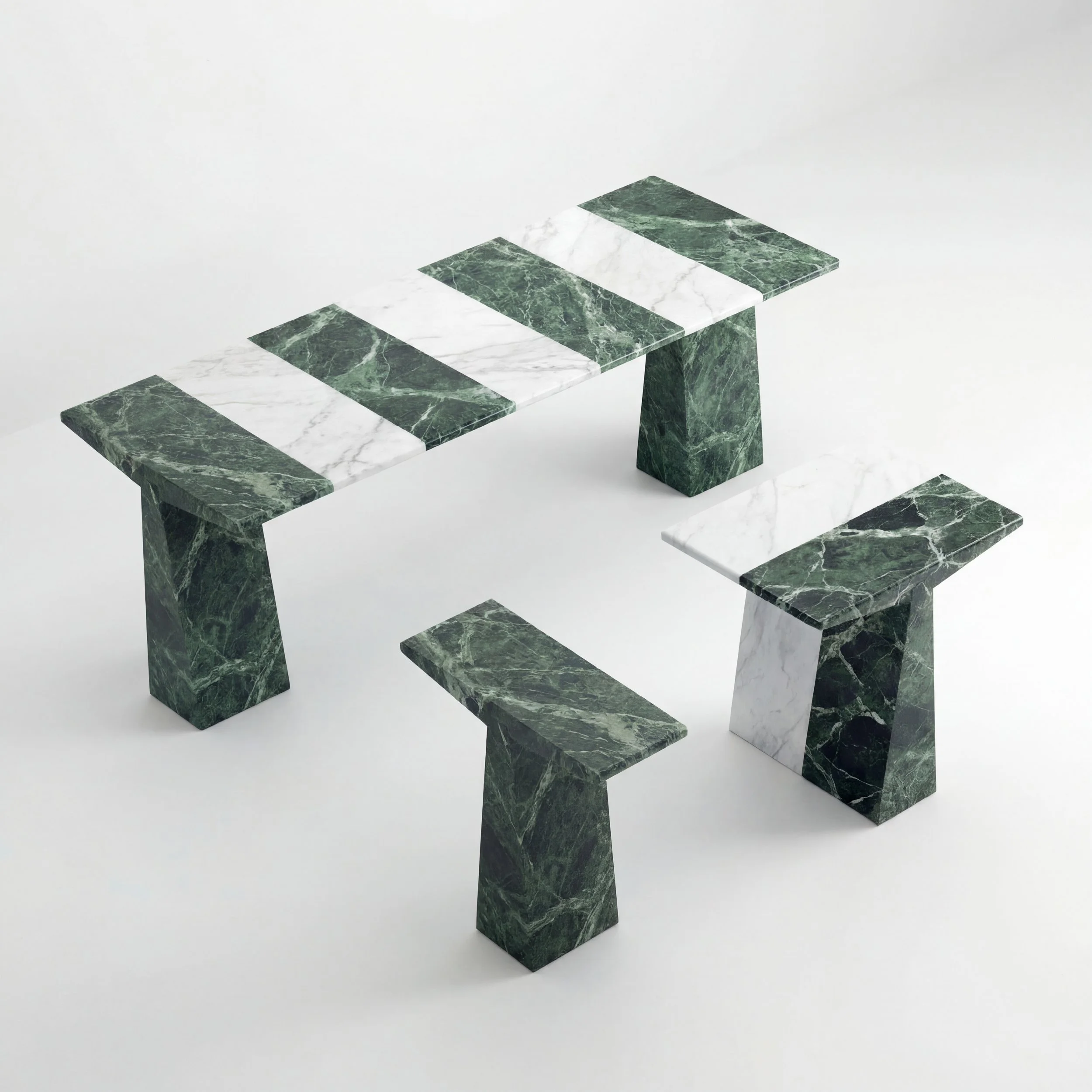
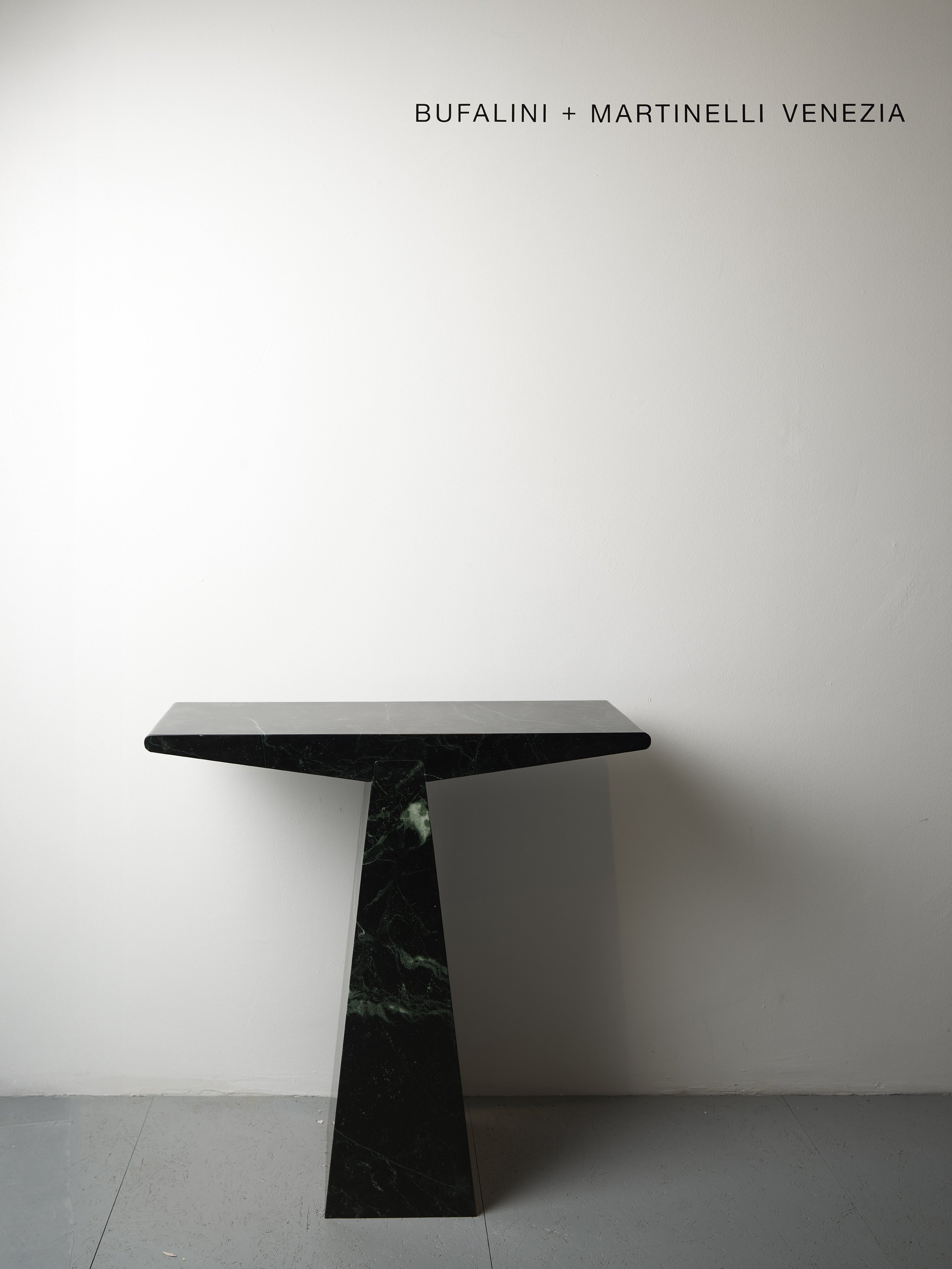
The table is the core of the system.
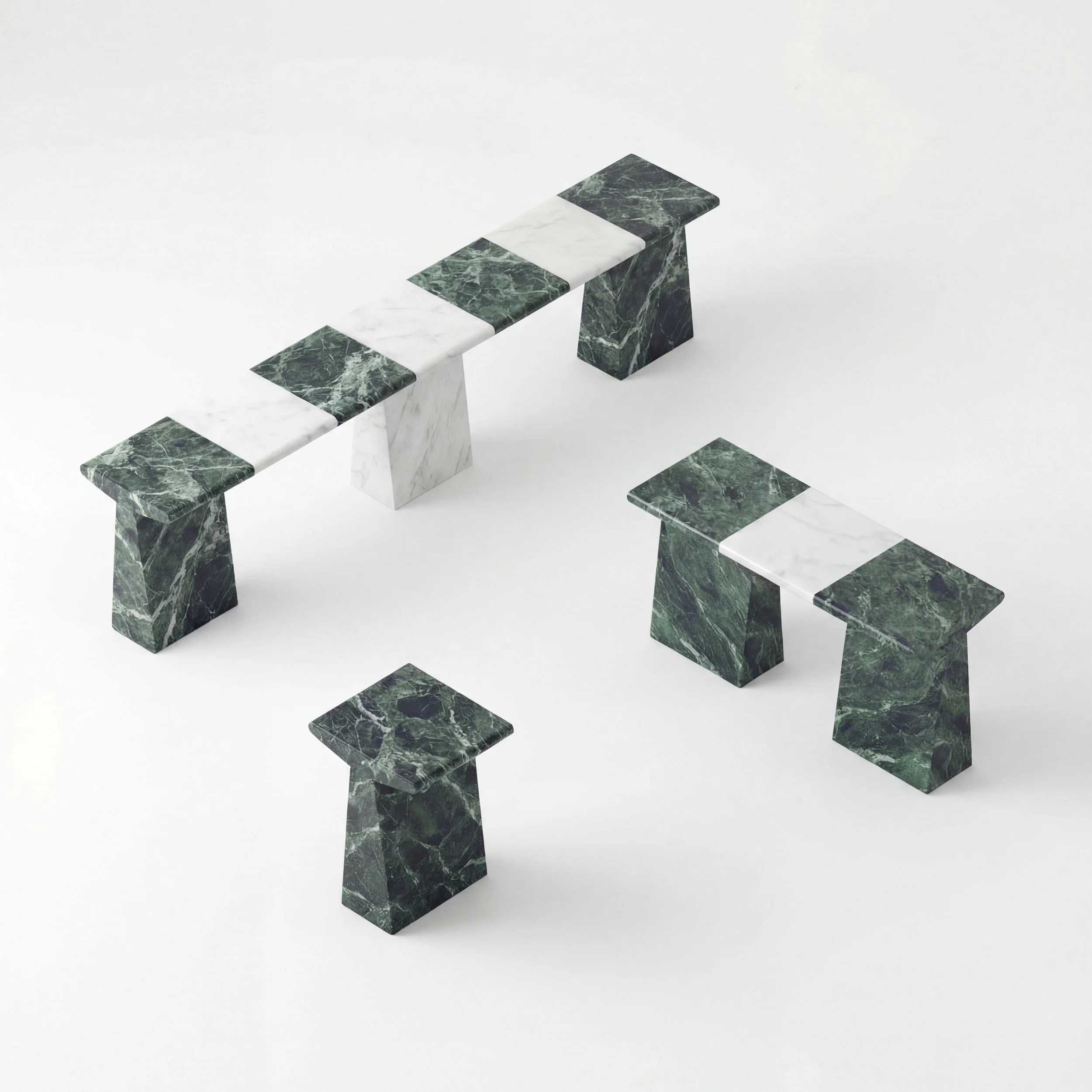
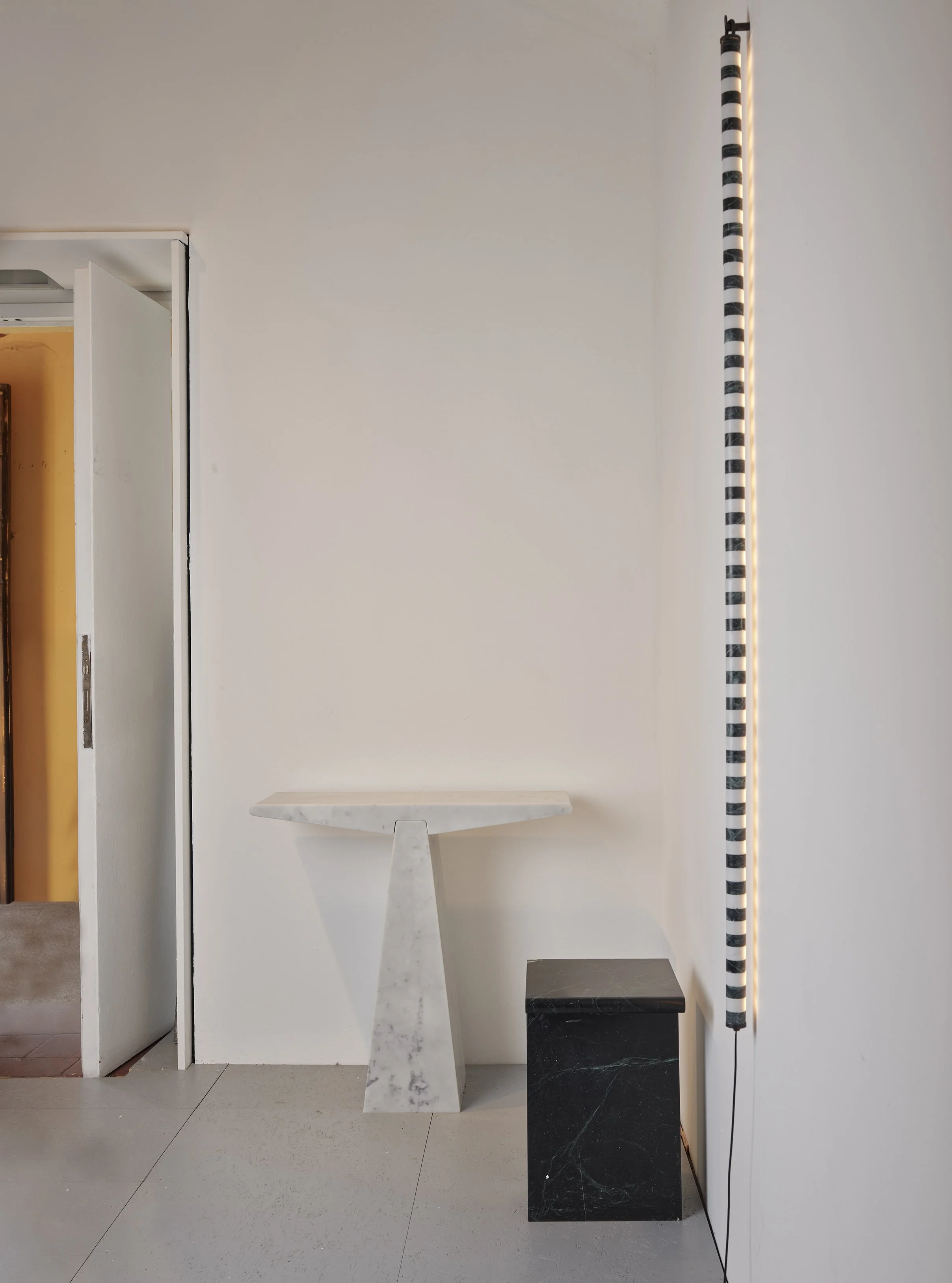
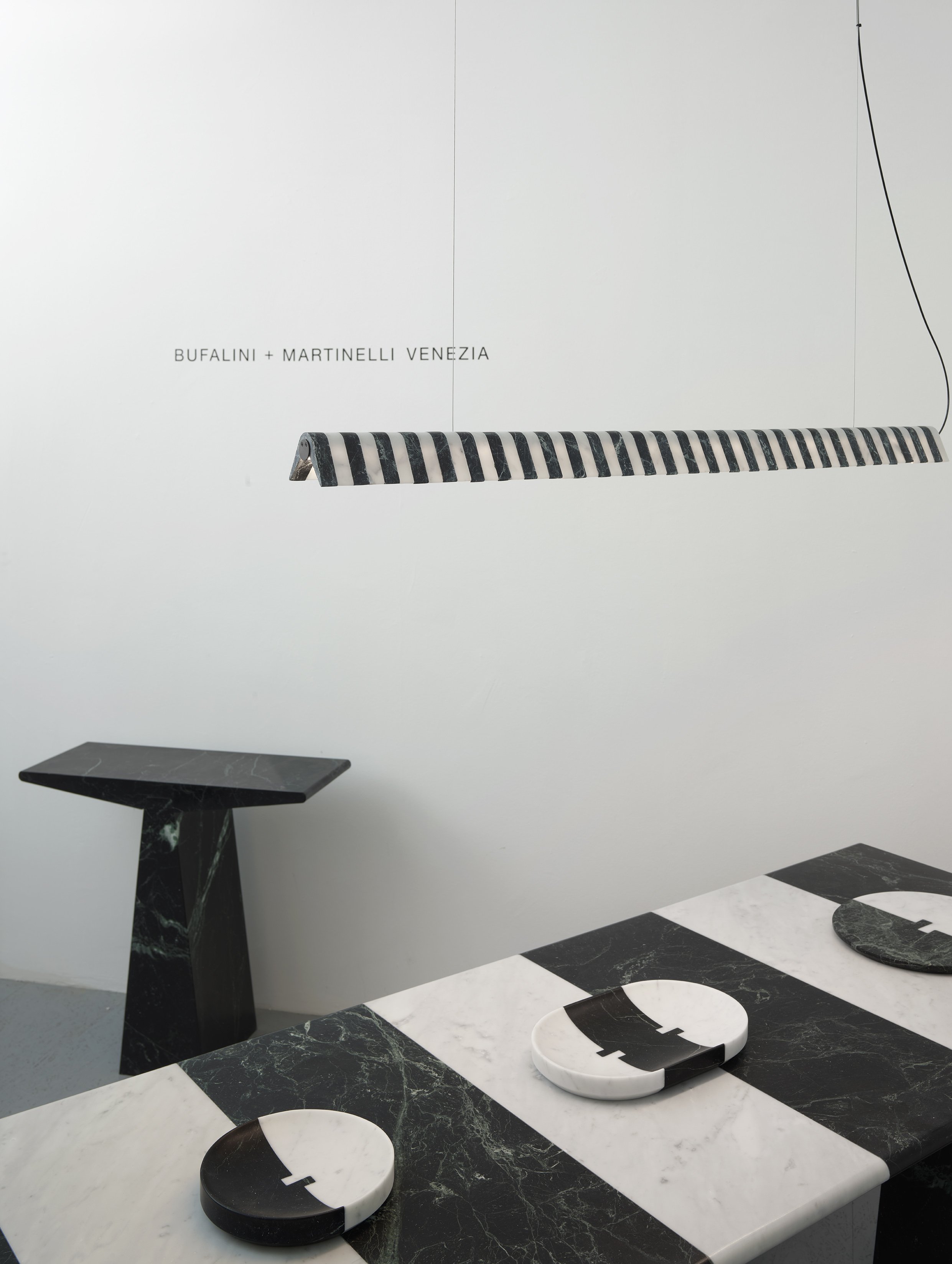
It is built from 30 cm elements, aggregated in length: from a console to tables exceeding six meters.
The same modules generate further configurations:
two elements define a coffee table, three a desk.
The stool extends into a bench.
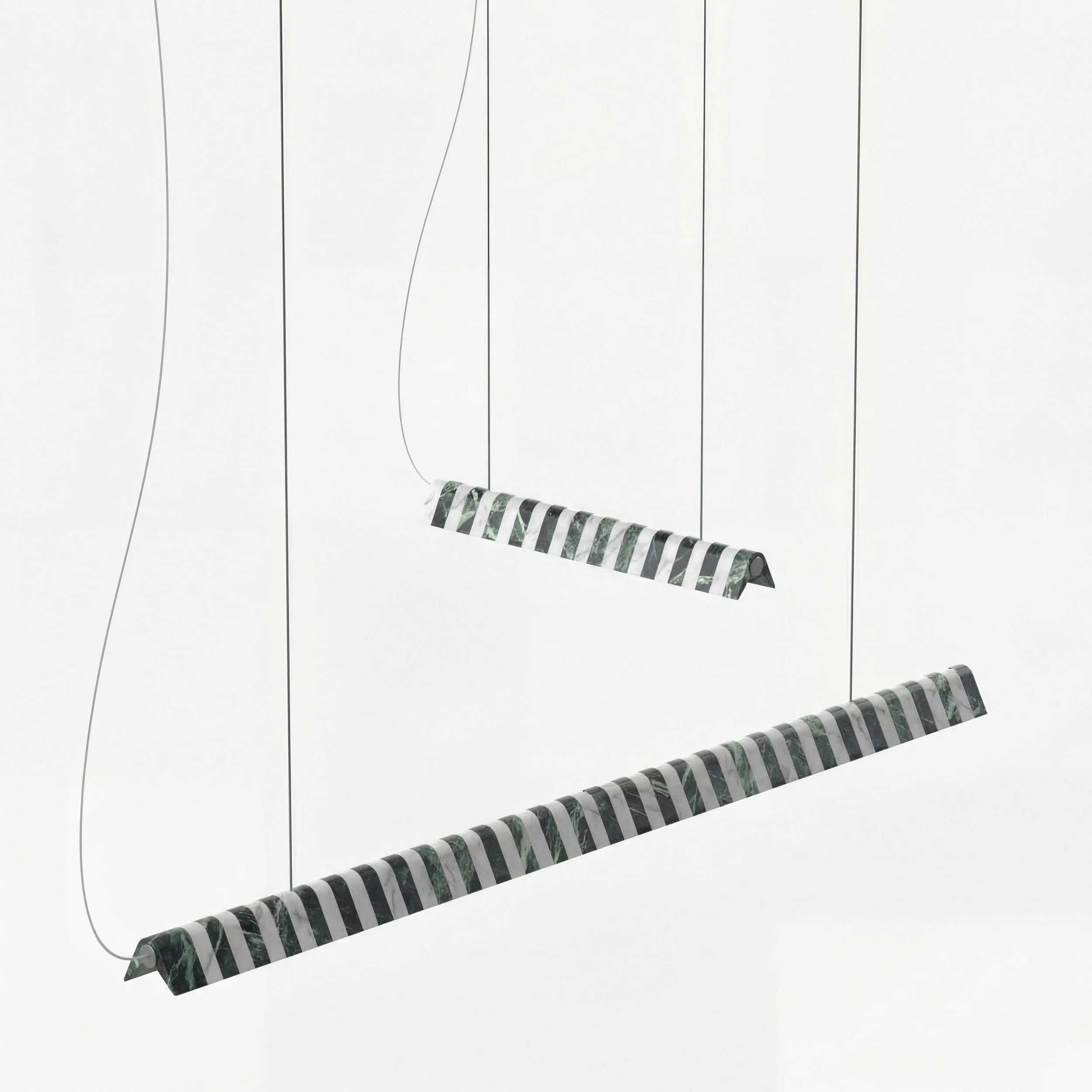
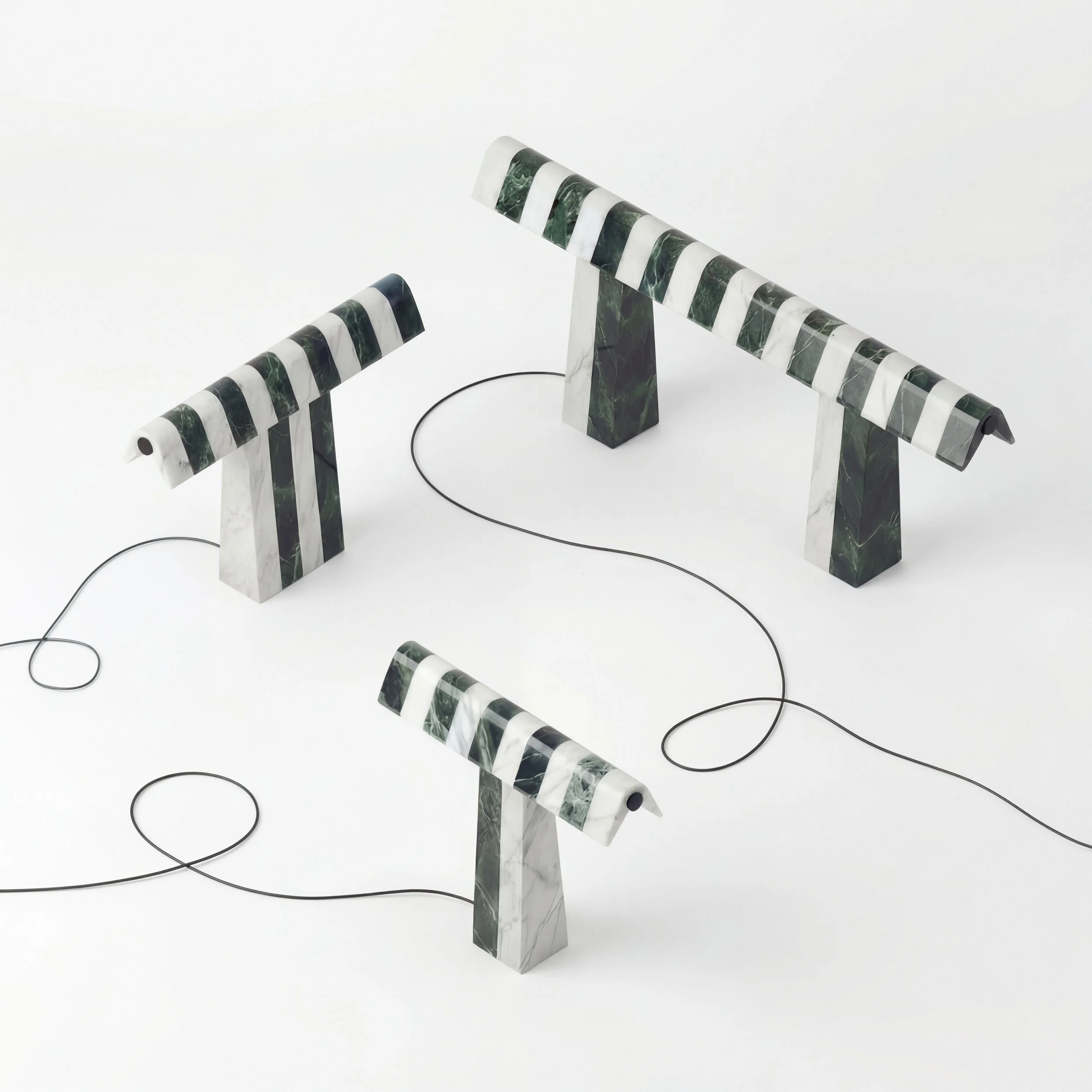
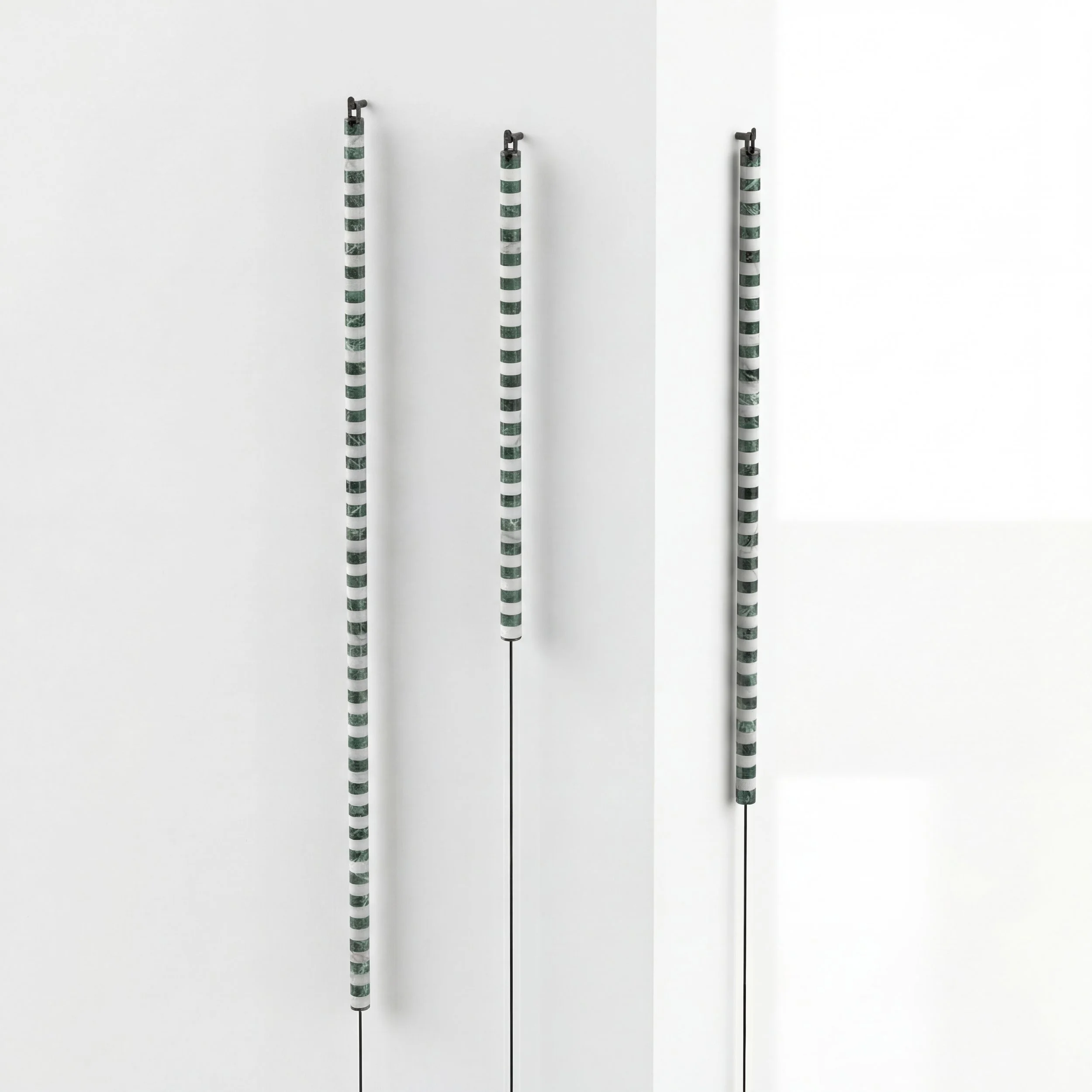
The same logic applies to light.
Pendant, table, and wall lamps are generated from elements with 2 or 4 cm sections.
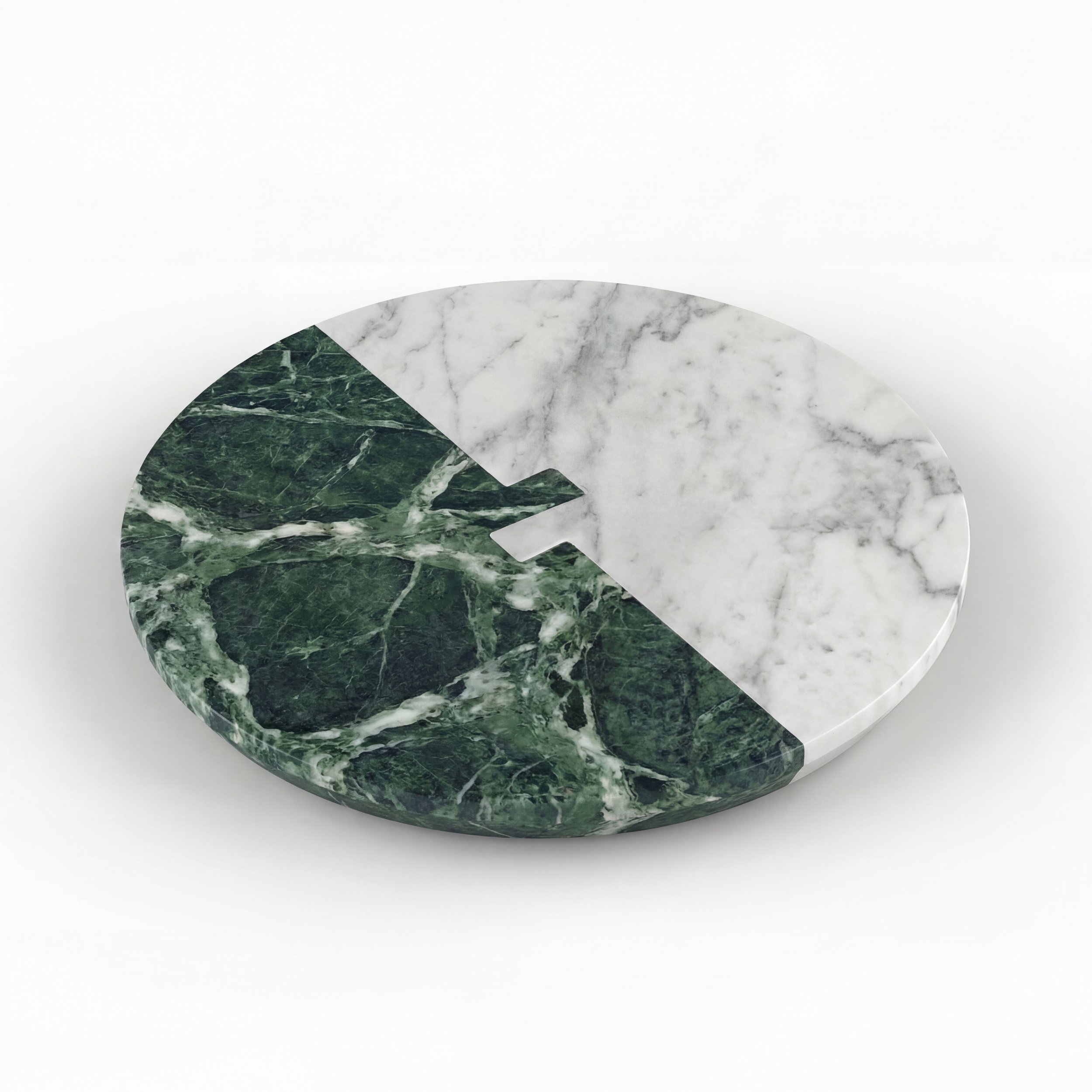
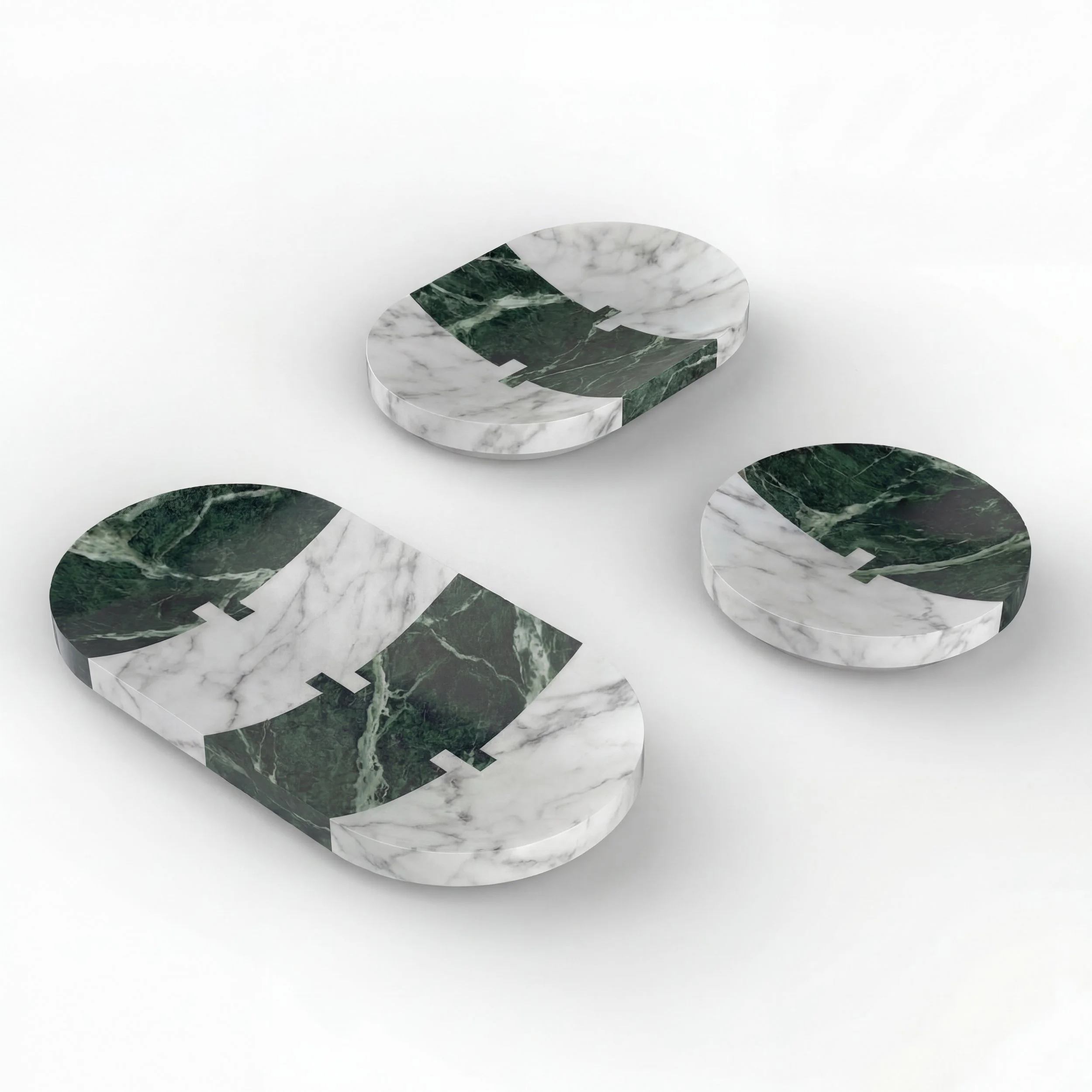
A family of plates and centerpieces completes the system.
10 cm elements interlock with one another.
The joint becomes pattern.
Bianco Carrara and Verde Alpi define a clear bichromy.
A reference to Tuscan stone tradition — not as a literal citation, but as an evocation of a shared material culture.
The historical use of Serpentino marble in Tuscan architecture — today mostly limited to restoration — is reinterpreted through the use of Verde Alpi.
Historic material, current structure.
Each element is produced through high-precision technologies — waterjet cutting and CNC milling — and finished by hand.
Industry and craftsmanship coexist within the same system.
The aggregation of small modules generates, at a perceptual level, the effect of a solid monolith.
Marble loses its static nature and becomes dynamic, composable.
Modularity is also a strategy.
It reduces transport and logistics, optimizes production, and extends the product’s lifecycle.
ALCM is an open system.
Designed to adapt, grow, and be reconfigured.
Credits and technical information
Concept and Design / Martinelli Venezia
Project Assistant / Giuseppe Fiducia
Materials / Verde Alpi e Bianco Carrara marble
Photo /